
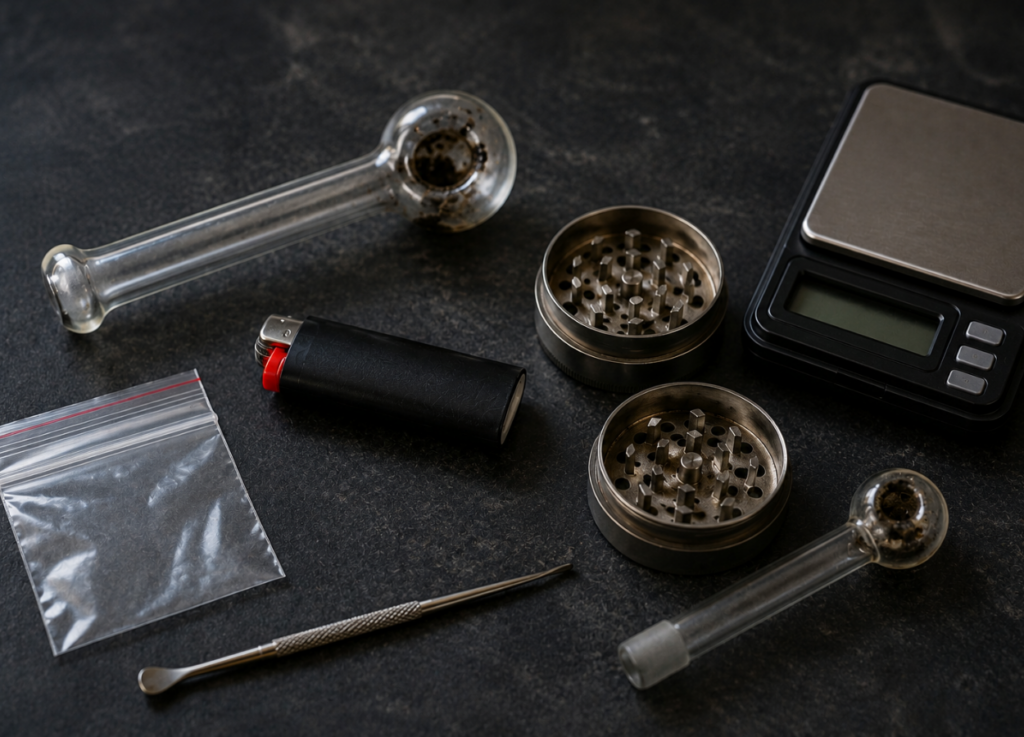
A lot of people are surprised to learn they can face criminal charges even when police do not find actual drugs. In Indiana, law enforcement can still make arrests based on items officers believe were intended for using, storing, manufacturing, or distributing controlled substances.
That is where drug paraphernalia charges come into play.
The problem is that many everyday objects can suddenly become “drug paraphernalia” depending on the situation, what officers claim they observed, and whether prosecutors believe the item was connected to illegal drug activity. Something as simple as a pipe, grinder, scale, baggies, or even burnt foil may become part of a criminal case.
For many people, these cases begin during:
- traffic stops,
- vehicle searches,
- probation searches,
- domestic disturbance calls,
- or investigations involving suspected drug activity.
What Is Considered Drug Paraphernalia in Indiana?
Indiana law broadly defines drug paraphernalia as equipment, products, or materials used in connection with controlled substances. That can include items connected to:
- using drugs,
- storing drugs,
- packaging drugs,
- manufacturing drugs,
- injecting substances,
- or distributing narcotics.
Police and prosecutors often look at the surrounding circumstances when deciding whether an object qualifies as paraphernalia. An item that appears harmless on its own may suddenly become evidence if officers believe it was connected to illegal drug use.
Common examples of alleged drug paraphernalia include:
- pipes,
- bongs,
- rolling papers,
- syringes,
- scales,
- grinders,
- small plastic baggies,
- burnt spoons,
- foil with residue,
- meth pipes,
- roach clips,
- and containers allegedly used to store narcotics.
Some paraphernalia cases involve actual drug residue. Others are filed even when no usable quantity of drugs is recovered.
Can You Be Charged if There Were No Drugs Found?
Yes. This surprises many people.
Indiana paraphernalia charges do not always require police to recover actual narcotics. Officers may still claim certain objects were intended for drug-related purposes based on:
- residue,
- odor,
- statements made during the stop,
- surrounding evidence,
- or the context of the investigation.
For example, police may treat a digital scale differently depending on where it was found and what other evidence officers claim was nearby. The same goes for baggies, syringes, or smoking devices.
That does not automatically mean the charge will hold up in court. In many cases, the facts surrounding the search, seizure, or investigation become extremely important.
What Types of Drugs Are Commonly Connected to Paraphernalia Charges?
Drug paraphernalia allegations in Indiana are often tied to:
- marijuana,
- methamphetamine,
- cocaine,
- heroin,
- fentanyl,
- prescription pills,
- and other controlled substances.
The type of alleged paraphernalia may influence how police and prosecutors approach the case. Methamphetamine-related investigations, for example, often receive more aggressive treatment because officers may suspect manufacturing activity or additional felony-level offenses.
Some paraphernalia items are associated more heavily with specific drugs. Glass pipes may trigger allegations involving methamphetamine, while syringes may lead officers to suspect heroin or fentanyl use. Rolling papers and grinders are more commonly connected to marijuana investigations.
Still, assumptions made by officers are not always accurate. People sometimes possess objects for legal reasons unrelated to drug use, or items may belong to someone else entirely.
Is Possession of Drug Paraphernalia a Felony in Indiana?
In many situations, possession of drug paraphernalia is charged as a misdemeanor. However, certain circumstances can increase the severity of the case.
Factors that may lead to more serious allegations include:
- prior criminal history,
- alleged intent to manufacture drugs,
- paraphernalia connected to methamphetamine production,
- possession near schools,
- or evidence suggesting drug dealing activity.
A paraphernalia charge may also appear alongside other offenses such as:
- drug possession,
- maintaining a common nuisance,
- operating while intoxicated,
- probation violations,
- or felony dealing allegations.
Even lower-level misdemeanor cases can still create problems involving employment, housing applications, professional licenses, and future criminal cases.
What Happens if Police Find Drug Paraphernalia During a Traffic Stop?
Traffic stops are one of the most common ways paraphernalia investigations begin. Officers may claim they smelled marijuana, observed suspicious behavior, or saw items in plain view inside the vehicle.
During these encounters, police often search for:
- smoking devices,
- residue,
- containers,
- prescription bottles,
- cash,
- or packaging materials.
Passengers and drivers sometimes both deny ownership, which creates additional complications. In shared vehicles, prosecutors may still attempt to argue someone had constructive possession of the paraphernalia based on where items were located.
The legality of the traffic stop and search itself may become a major issue in the case later. If police violated constitutional protections during the stop or search, certain evidence may potentially be challenged.
Can Drug Paraphernalia Charges Be Dropped?
Every case depends on its own facts, but paraphernalia charges are not automatically unbeatable simply because police found suspicious objects.
Defense strategies may involve disputes over:
- ownership,
- illegal searches,
- lack of residue testing,
- insufficient evidence,
- constructive possession,
- or whether the object actually qualifies as paraphernalia under Indiana law.
Some cases involve weak evidence from the beginning. Others become more complicated because statements made during the investigation create additional issues prosecutors later rely on.
People often hurt themselves early in these cases by trying to explain too much during police questioning without fully understanding the allegations.
Why Drug Paraphernalia Charges Matter More Than People Think
A lot of individuals initially view paraphernalia allegations as “minor” charges. The problem is that these cases often create ripple effects beyond the courtroom itself.
A conviction may affect:
- future background checks,
- probation status,
- professional licensing,
- financial aid eligibility,
- and future sentencing exposure if additional arrests occur later.
Drug-related offenses also tend to receive extra scrutiny from employers and licensing boards even when the charge itself is technically a misdemeanor.
Charged With Possession of Drug Paraphernalia in Indianapolis?
Drug investigations move quickly once police file reports and prosecutors begin reviewing evidence. Statements made during traffic stops, searches, or interviews may later become central parts of the prosecution’s case.
Hayes Law Office has spent more than 20 years defending people charged with drug offenses throughout Indiana, including possession allegations, paraphernalia charges, methamphetamine cases, marijuana-related offenses, probation violations, and felony drug investigations.
Attorney Philip Hayes and the team at Hayes Law Office have earned more than 300 five-star reviews from former clients across Indiana. Early defense strategy can make a major difference in how drug-related cases are investigated, charged, and resolved.